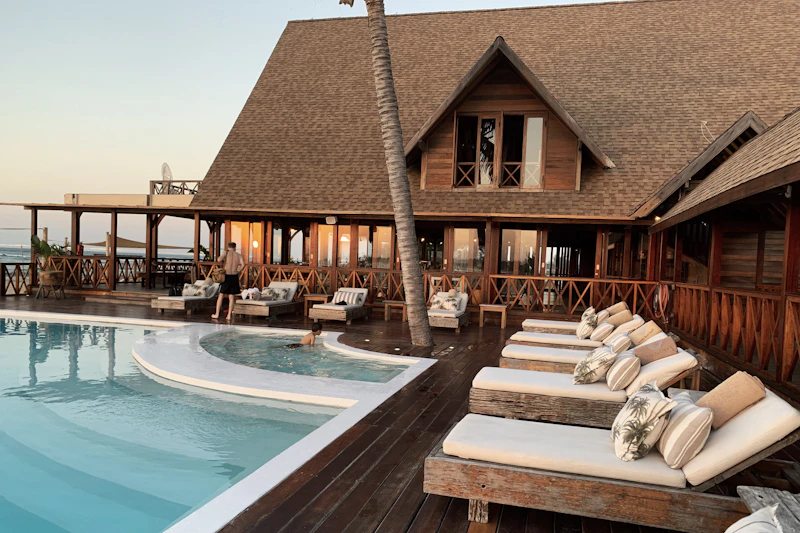
Hotels, motels, inns, conference centres, and unique hospitality assets — we guide you through RevPAR analysis, flag agreements, PIP review, and physical condition assessment to acquire with confidence.
Hospitality properties offer higher cap rates than other commercial asset classes precisely because they require active management — and that complexity creates opportunity for experienced operators. Branded flags bring reservation infrastructure; independents offer margin and repositioning flexibility. The post-pandemic travel recovery has returned occupancy to pre-2020 levels across Southern Ontario's leisure and business corridors.
Revenue Per Available Room (RevPAR) and Average Daily Rate (ADR) are the core hospitality metrics. Review 3 years of STAR report data to benchmark against the competitive set (comp set). Verify occupancy trends and seasonality — especially if the asset is leisure-dependent.
For branded properties, review the franchise agreement term, royalty fees (typically 5–8% of room revenue), required brand standards, and PIP obligations. Assess whether the flag will approve the ownership change — and whether the brand remains the right flag for the market.
Brands require new owners to complete a PIP — renovation scope set by the franchisor. PIP costs range from $5,000 to $30,000+ per key depending on condition. Commission an independent PEX (property condition) review and get detailed PIP cost estimates before finalizing your offer price.
Analyze food and beverage revenue separately from rooms. Verify liquor licence (AGCO) transferability, catering and banquet contracts, staffing levels, and kitchen equipment condition. Conference and event business provides stable group bookings — review the forward group pace report.
Hospitality properties have intensive mechanical systems: PTAC units, commercial laundry, elevators, commercial kitchen exhaust, life safety, and pool/spa systems (if applicable). A full Property Condition Assessment (PCA) by a licensed engineer is essential to quantify deferred maintenance before closing.
If the property operates under a third-party hotel management company, review the agreement terms, termination provisions, and incentive fee structure. Identify key staff (GM, F&B director, sales manager) whose retention is critical to operating continuity post-close.
Hospitality properties are typically valued on an EBITDA multiple (6×–10×), not purely cap rate, because the business component is inseparable from the real estate. Revenue multiples and price-per-key (typically $40,000–$150,000+ depending on quality tier and market) provide useful cross-checks. We help you model all three approaches to ensure you're paying a defensible price.
We identify flagged and independent hospitality properties matching your investment criteria — location, room count, flag affiliation, price range, and cap rate target. We access off-market opportunities through industry networks before assets hit public listing platforms.
We review STAR reports, STR benchmarking, trailing 12-month P&L, forward group pace, and segment mix. We build a stabilized NOI model and assess upside scenarios — repositioning, rate optimization, ancillary revenue enhancement, and operational improvements.
For branded properties, we coordinate with the franchisor's real estate team on ownership change approval and PIP scope. We obtain PIP cost estimates and negotiate seller credits or price adjustments to reflect renovation obligations.
We structure your APS with appropriate conditions for physical inspection, franchise approval, AGCO licence transfer, management contract review, and financing. We guide you through every step to a clean, risk-mitigated close.
Niagara Falls, Blue Mountain/Collingwood, Muskoka, and Prince Edward County have seen sustained leisure demand recovery. ADR in top-performing leisure markets now exceeds 2019 levels. Assets positioned in these corridors command premium multiples.
Toronto, Mississauga, Hamilton, and Kitchener-Waterloo urban markets have seen corporate travel return but at mixed intensity. Extended-stay and select-service flags (Residence Inn, Courtyard, Hampton) have outperformed full-service assets in the post-pandemic recovery.
Unbranded independent motels and smaller hotels trade at significant discounts to branded peers — often 30–50% less on a RevPAR multiple basis. Buyers with renovation capital and operational expertise can extract material value through repositioning, rebranding, or selective conversion.
Older, lower-tier hotel properties in urban markets are increasingly being considered for residential conversion (supportive housing, student housing, rental apartment) — often with provincial or municipal incentive programs. We evaluate conversion feasibility alongside traditional hospitality value.
Talk to a caprate.ca specialist — we'll identify the right asset, run the numbers, and guide you through every complexity at a low commission.
Start Your Search →